
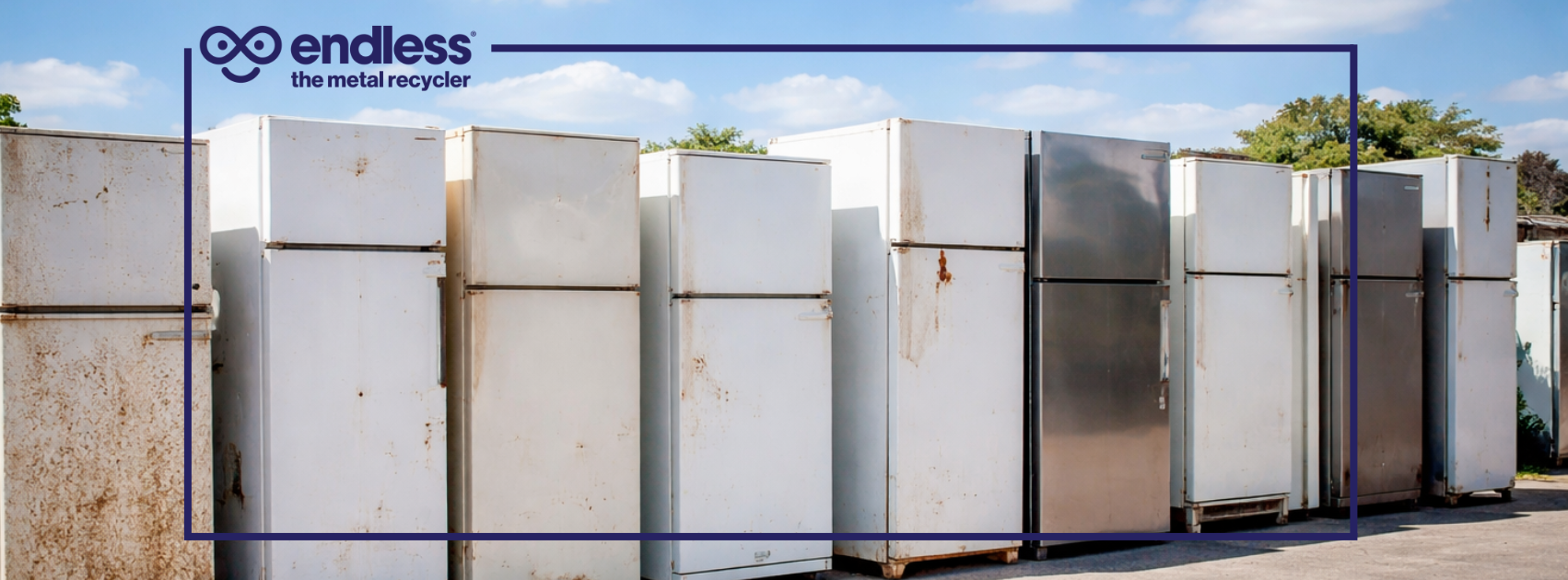
For years, the standard approach has been simple: your fridge dies, you pay someone to take it away.
But here’s the reality, an old fridge isn’t just waste. It’s a heavy bundle of recyclable materials, and when handled properly, it has value. Instead of paying removal fees, you can turn that bulky whiteware into cash.
At Endless Onehunga, we will pay you $0.15/kg for scrap fridges. whether they’re gassed or de-gassed. Even more importantly, we have the capability to safely recover refrigerants through the proper environmental pathway, working alongside Cool-Safe, New Zealand’s refrigerant stewardship programme.
So, why are we paying you unlike everyone else? Because you’re choosing to dispose of the fridges sustainably, we think it’s only fair to pass the savings onto you!
Fridges are commonly scrapped at Endless alongside a wide of other whiteware appliances. Click here to learn more about the items we accept for whiteware scrap for cash.
Transporting Your Fridge Safely
If you’re bringing your fridge in yourself, transport matters. Fridges should always be moved upright where possible to avoid oil and refrigerant shifting within the system. Laying a fridge flat can cause compressor oil to migrate into cooling lines, increasing the risk of leaks or internal damage.
While the unit is being scrapped, preventing unnecessary gas release during transport is important for both safety and environmental reasons. Secure the fridge properly, avoid puncturing lines, and never attempt to cut into or tamper with refrigerant components before delivery. If it must be transported on its side, keep it upright for a period before handling further and ensure it remains intact until it reaches a facility equipped for proper recovery.
How to Prep Your Fridge for Drop-Off (5-Point Checklist)
1. Empty It Completely
Remove all food, shelving, drawers, and loose internal components. This reduces weight discrepancies and makes handling safer.
2. Keep It Intact
Do not cut, puncture, or tamper with refrigerant lines or the compressor. Proper recovery should be done using the right equipment.
3. Transport Upright Where Possible
Move the fridge in an upright position to prevent oil and refrigerant shifting within the system. Secure it properly during transit.
4. Remove External Add-Ons
Take off loose brackets, glass panels, or external fittings if possible. This helps prevent breakage and contamination.
5. Bring It Straight In
Avoid storing damaged or partially dismantled units. The sooner it reaches a proper recycling facility, the lower the risk of leaks or deterioration.
The Financial Case: Why Pay to Throw Away Value?
When you pay a removal service, you’re covering labour, transport, and often disposal fees — even though the unit contains recyclable metal that already has commodity value.
Here’s the difference:
| Option | What You Pay/Get | Outcome |
| Removal service | You pay a fee | Unit may be recycled, resold, or stripped |
| Transfer station | You pay a drop-off fee | Process varies by facility |
| Endless | You get paid per kg | Materials recovered, refrigerant handled correctly |
Why pay someone to take something that still has value?
The Environmental Side: Why De-Gassing Matters
Fridges don’t just contain metal, they contain refrigerants. Some refrigerants, particularly older hydrofluorocarbons (HFCs), are extremely potent greenhouse gases if released into the atmosphere.
New Zealand’s Ministry for the Environment has identified improved refrigerant recovery and destruction as a key opportunity for reducing emissions. Poor end-of-life handling can result in gases being vented, which significantly increases climate impact.
Cool-Safe, a New Zealand environmental trust, works to collect and destroy refrigerants safely. Their programme is designed specifically to prevent harmful gases from entering the atmosphere and to support responsible industry practice.
Modern domestic fridges often use R600a (isobutane), which has a very low global warming potential compared to older refrigerants. However, that doesn’t mean recovery is optional. Safe handling is still required, and you should never assume what refrigerant a unit contains.
Professional recovery ensures:
- Refrigerant is captured properly
- Gas is sent for certified destruction
- Climate impact is minimised
- Safety risks (including flammability in some gases) are managed correctly
That’s why certified pathways matter.
Endless + Cool-Safe: Doing It Properly
At Endless Onehunga, scrap fridges are processed through a responsible pathway. We have the capability and necessary certifications to de-gas units safely and work in alignment with recognised refrigerant stewardship practices.
Cool-Safe’s programme is specifically designed to:
- Collect refrigerants from industry participants
- Ensure safe transport and destruction
- Reduce emissions from end-of-life appliances
This means when you bring your fridge in, it’s not just about weight and payment — it’s about responsible handling from start to finish.
Why This Matters Economically
When households and businesses pay removal fees, they’re often paying for:
- Transport
- Labour
- Disposal processing
- Administration
Yet the fridge itself contains recyclable commodities that enter secondary metal markets.
By scrapping through a recycler:
- Metal is recovered and reused
- Commodity value re-enters the circular economy
- Refrigerant is handled correctly
- You receive payment rather than paying out
Frequently Asked Questions
Do I need to de-gas my fridge before bringing it in?
No. Bring it as-is. We have the capability to handle the refrigerant safely through the proper recovery pathway.
What if my fridge is still gassed?
That’s fine. Gassed and de-gassed units are accepted.
Is it safe?
Yes. When handled through proper recovery and recycling processes. Refrigerant handling should never be done casually or without the right equipment.
Why can’t I just puncture it and let the gas out?
Because releasing refrigerant can contribute to greenhouse gas emissions and may be unsafe. Certified recovery is the responsible approach.
Why does refrigerant matter so much?
Some refrigerants have a global warming potential thousands of times greater than CO₂. Proper capture and destruction prevent unnecessary emissions.
The Bigger Picture: Circular Economy in Action
New Zealand is actively working toward improved refrigerant recovery and emissions reduction. End-of-life handling is one of the most practical intervention points.
When you bring your fridge to a recycler rather than sending it to landfill or informal disposal:
- Valuable metals are recovered
- Hazardous gases are handled correctly
- Emissions are reduced
- Materials re-enter productive use
That’s the circular economy in action. Not only are you contributing to a greener environments, but your wallet gets a healthy boost as well!