
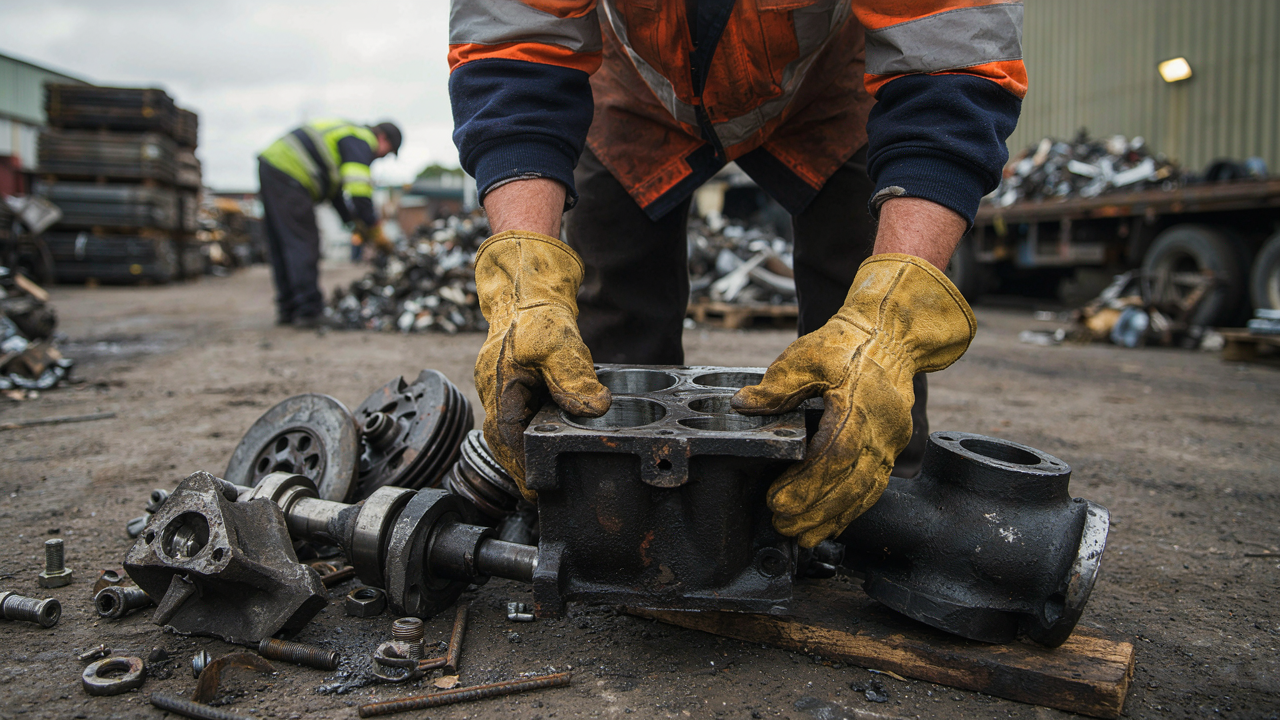
If you’ve just ripped an old cast iron bath out of a villa in Mt Eden, pulled a dead wood burner out of a bach, or you’ve got an engine block sitting in the corner of the workshop, you’re dealing with some seriously heavy metal.
Which, in this case, is a good thing.
Cast iron is one of those materials people often have without really knowing what they’ve got, or whether it’s worth bringing to a metal recycler at all.
If you’re checking the cast iron scrap price NZ, it helps to understand what counts as cast iron, how it’s graded and what you can do before you load the ute to make sure you’re getting the right grade for your metal.

What is cast iron?
Cast iron is an iron alloy with a high carbon content, typically between two and four per cent. It’s heavy, hard and brittle.
Steel tends to bend. Cast iron is much more likely to crack. That’s why old cast iron guttering can shatter when it’s dropped and why anyone who’s ever tried to move a cast iron bath remembers the experience.
Cast iron is a ferrous metal, which means it contains iron and sticks to a magnet. The magnet test is useful, but it won’t tell you whether something is cast iron or steel because both are magnetic.
There are a few other clues.
Cast iron tends to be thick and chunky, with rounded edges and a lot of weight for its size. If it’s already broken, the exposed edge is usually grey, rough and grainy rather than shiny. Older cast pieces can also have visible seam lines, raised lettering or a rough surface left by the mould they were poured into.
If you’re still looking at it thinking, “I’ve got absolutely no idea,” don’t.
Bring it in. The team will identify and grade it when you arrive.
There’s also a straightforward definition in the endless scrap metal glossary.

Where does cast iron turn up around Auckland?
Older Auckland homes are a good place to start.
Cast iron baths are an obvious one, particularly the heavy roll-top type found in older houses. Renovations can also uncover cast iron guttering and downpipes, older sewer and stormwater pipe, sinks, laundry tubs, fireboxes, grates and parts from old heating systems.
Workshops produce a different mix. Engine blocks and cylinder heads, brake discs and drums, exhaust manifolds, gearbox and differential housings can all turn up. It’s worth remembering that not every housing is cast iron. Some are cast aluminium, so if you’re not sure, try a magnet or let us check it at the yard.
Then there’s industrial and demolition material. Machinery bases, lathe beds, press frames, manhole covers, grates, pump housings, valve bodies and counterweights can all contain cast iron.
Even an old cast iron stove, camp oven or frying pan has somewhere to go once it’s genuinely reached the end of its life. With Auckland’s mix of older housing, workshops and industrial areas, it’s not unusual material for us to see coming across the weighbridge..
How endless grades cast iron

At endless, cast iron sits within the Heavy Steel family on our steel recycling page and is listed as heavy cast iron pieces.
We grade it when it arrives at the yard. What comes in with it matters.
A clean, drained cast iron engine block is different from an engine assembly that arrives with oil, an aluminium sump, steel attachments and other materials still on it.
The same goes for a cast iron bath with brass taps and waste fittings attached. Paint, contamination, attachments and mixed metals can affect the final grade. It’s also why we don’t give you a permanent cast iron dollar figure in an article like this. Metal markets move, and our Onehunga and Wairau Valley yards publish their current prices separately.
Heading to Onehunga? Check the Onehunga live prices before you leave.
Coming from the North Shore or West Auckland? Check the Wairau Valley live prices.
You’ll also find our pricing calculator there, so you can get an idea of value before loading up. The final grade and payment are confirmed at the weighbridge once we’ve seen what you’ve brought in.
Before you load up
You don’t need to dismantle every piece of cast iron down to its component parts before bringing it to us. A little preparation, though, can make grading much more straightforward.
Drain anything that has held oil or fuel
Engine blocks, gearboxes, differentials, pumps and similar components should be drained before they come in.
Motors containing oil can’t be accepted at either yard, and fuel tanks aren’t accepted. You can check the full list on our what we buy and don’t buy page. If you’re not sure about something, give us a call before you load it. It’s much easier than finding out after you’ve wrestled an engine block onto the trailer.
Separate brass and aluminium
This is worth doing where it’s easy and safe.
Old cast iron baths can still have brass taps and waste fittings attached. Engine assemblies may have aluminium sumps, brackets or heads. Other cast iron items can have different metals attached too. Those materials aren’t all the same grade. If you can easily separate them, do it. Keep the brass together and the aluminium separate so each metal can be graded for what it actually is.
There’s no prize for arriving with the world’s most dismantled bath, though. If something doesn’t come apart easily, leave it and let us take a look.
Keep heavy cast iron away from light steel
Roofing iron, appliance shells and filing cabinets are light gauge steel. An engine block or heavy cast iron machinery component is a different grade.
If you’ve got both in the same load, keeping them separate where practical makes grading much easier when you arrive. This is particularly useful for tradies who are collecting different metals over several jobs. A few separate bins at the workshop can save a lot of sorting later.
Break it down only if it makes sense
Cast iron cracks rather than bends, which means some larger items can be broken into more manageable pieces. That doesn’t mean everything needs to meet a sledgehammer. If you do break cast iron down, wear eye protection and gloves. The broken edges are sharp and pieces can fly. And if something is simply too big or heavy to deal with safely, leave it whole. We’ve got equipment at the yard to handle heavy material.
Be careful with very old equipment
This matters when you’re dealing with old heating equipment, boilers, lagged pipework or other building materials where you don’t know what the insulation or gasket material is. Asbestos products aren’t accepted at either endless yard.
Don’t guess. If you think something may contain asbestos or another hazardous material, get it checked before it goes anywhere near a metal recycling yard. The same applies to anything that may still contain chemical or fuel residue. Our what we don’t accept information covers the basics, or call the team on 0800 44 88 99 if you’re unsure.
What about enamelled baths and painted stoves?
You don’t need to spend your weekend stripping an old bath before you bring it in. Enamel and paint are coatings on the casting. How a particular item is graded will depend on what you’ve actually got, so bring it in and let the team assess it. If something does need attention, we’ll tell you.
If you’re a tradie, it adds up
Plumbers, builders and demolition crews probably come across cast iron more often than most.
Old waste pipe comes out during a re-plumb. Machinery gets replaced. Engine components accumulate. Renovations uncover metal that’s been sitting in Auckland buildings for decades. One piece might not look particularly exciting. Keep throwing it into the same pile for six months and that’s a different story.
If your business generates recyclable metal regularly, get into the habit of separating it as you work. Heavy cast iron together. Light steel separately. Brass, aluminium and other metals in their own bins. You’re already doing the job. You may as well keep the value that’s left behind.
Both endless yards handle trade volumes and drive-through weighbridge loads, and there’s more information for larger projects on our construction and demolition page.
If you’re bringing metal in regularly, our Tradie Legends programme is designed for trade customers. We also offer a price match guarantee on door prices, so you don’t need to spend your afternoon driving between yards trying to compare rates.
What if you’ve just got one old bath?
That’s fine too. You don’t have to arrive with a truck full of metal. If you’re renovating at home and you’ve got an old cast iron bath, wood burner or another heavy metal item sitting beside the garage, don’t automatically assume it belongs in a skip. Cast iron is heavy. Even one unwanted item can put meaningful weight across the scales.
There’s no gate fee or tipping fee for accepted metal at endless. You bring it in, we identify and grade it, and you’re paid for the metal we accept. If you’ve never visited a metal recycler before, our residential recycling page explains how it works.
Where to bring cast iron in Auckland
You can bring accepted cast iron to either of our Auckland yards. No appointment is needed.
Onehunga is at 147 Neilson Street and is handy for central and South Auckland, including Penrose, Māngere and Ōtāhuhu. Check the latest information on our Onehunga yard page before you visit.
Wairau Valley is at 245 Archers Road and serves the North Shore and surrounding areas. You’ll find current details on our Wairau Valley yard page.
Drive in, have your metal graded and get paid. And if you’re still standing in the garage staring at an old bath, engine block or mystery chunk of metal wondering whether it’s actually cast iron?
Bring it in.
We’ll work it out.