
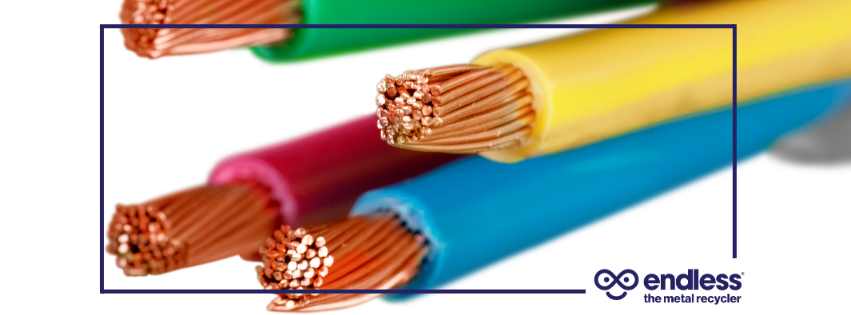
Copper wire scrap is one of the most common and valuable forms of copper recycling in New Zealand. From residential wiring and commercial fit-outs to appliance cords and demolition material, insulated copper cable shows up everywhere. But not all copper cable scrap is equal, and the difference often comes down to one thing: PVC content.
At Endless, we grade insulated copper wire based on the percentage of copper versus PVC insulation. Understanding this breakdown helps customers know what they have and why different cables return different values.
See more information on Endless’ copper recycling capabilities here.
If you are bringing in TPS cable scrap, appliance leads, extension cords, or mixed insulated copper wire, this guide will walk you through how it is assessed and why PVC plays such an important role in copper recycling. With many global challenges ahead, it’s important to consider the benefits of recycling copper wire throughout the world.
Why PVC Exists in Copper Wire
PVC, or polyvinyl chloride, is used as insulation around copper conductors. It protects the wire from moisture, physical damage, and electrical short circuits. In building applications such as TPS cable, PVC insulation ensures safety and compliance with electrical standards.
Without PVC insulation:
- Copper wiring would corrode faster
- Electrical systems would be unsafe
- Fire risk would increase
- Installations would not meet code
So while PVC reduces the percentage of pure copper in a cable, it is essential during the wire’s working life. When it comes to recycling, however, PVC becomes the separating factor in how copper cable scrap is graded.
Understanding Copper Wire PVC Categories
Insulated copper wire scrap is typically sorted by the copper recovery percentage once PVC is removed. At Endless, this generally falls into four categories:
- 65% PVC copper scrap
- 42% PVC copper scrap
- 30% PVC copper scrap
- PVC with plug (appliance cords and mixed leads)
The percentage refers to the approximate copper content relative to the insulation.
Quick Reference Table
| Category | Typical Copper Content | Common Examples | Notes |
| 65% PVC | Higher copper density | Heavier gauge cable, thicker cores | Stronger return per kg |
| 42% PVC | Mid-range copper density | Standard TPS cable scrap | Very common in residential builds |
| 30% PVC | Lower copper ratio | Lighter domestic cable | More insulation than copper |
| PVC with Plug | Mixed copper with plug attachments | Appliance cords, extension leads | Plugs and attachments included |
65% PVC Copper Scrap
This category contains a higher proportion of copper relative to insulation. The cores are typically thicker and heavier, meaning stronger copper recovery once processed.
Common examples:
- Heavier electrical cable
- Industrial wiring
- Multi-core commercial cable
Because copper content is higher, this category typically achieves better pricing than lower-density insulated wire.
42% PVC Copper Scrap – The TPS Cable Category
This is where TPS cable scrap sits most commonly. TPS (Thermoplastic Sheathed) cable is widely used in New Zealand homes and commercial buildings. It contains insulated active, neutral, and earth wires within a PVC sheath.
TPS cable scrap is extremely common from:
- Renovations
- Demolition sites
- Electrical upgrades
- New builds
The copper-to-PVC ratio in TPS cable generally places it in the mid-range insulated copper category. It is one of the most frequently seen types of copper cable scrap at both our Onehunga and Wairau Valley yards.
If you are scrapping residential wiring, there is a strong chance you are bringing in TPS cable scrap.
30% PVC Copper Scrap
This category contains a lower copper content relative to insulation. These cables tend to be lighter and more heavily insulated.
Common sources:
- Light domestic wiring
- Small appliance leads (without plug weight considered)
- Thin multi-strand cables
While still valuable, the increased PVC weight means lower copper recovery per kilogram.
PVC Copper Scrap with Plug
This category includes copper cable that still has attachments such as:
- Three-pin plugs
- Appliance ends
- Molded connectors
- Extension cord fittings
Appliance cords, fridge leads, washing machine cables, and power boards typically fall into this category. These are extremely common in household clear-outs and commercial appliance replacements.
The plug adds non-copper weight, which affects grading. However, these cables are still fully recyclable and widely accepted as copper wire scrap.
Should You Strip Copper Wire?
This is one of the most common questions we receive at Endless.
In some cases, stripping insulated copper wire down to bare bright copper can increase value. However, this depends on:
- Volume
- Labour time
- Equipment available
- Wire gauge
For many customers, especially tradies handling TPS cable scrap, the time spent stripping is not worth the marginal gain unless dealing in high volume. Bringing insulated copper cable scrap in its original form is often the most practical solution.
If you are unsure, our teams at Onehunga and Wairau Valleycan advise on the spot.
Why Copper Cable Scrap Matters
Copper is a finite resource, and its demand remains strong globally. Recycling copper wire scrap:
- Reduces landfill waste
- Conserves raw materials
- Supports sustainable construction
- Reduces energy consumption compared to mining
PVC copper scrap recycling ensures both the copper conductor and insulation are processed responsibly through approved recovery channels.
Where to Scrap Copper Wire in Auckland
If you are searching for:
- scrap copper wire Auckland
- copper cable scrap near me
- TPS cable scrap Auckland
- PVC copper scrap prices
Both yards accept insulated copper cable scrap, TPS cable scrap, appliance leads, and mixed PVC copper scrap.
Our process is straightforward:
- Drive in
- Weigh
- Get paid
Examples of Common Copper Cable Scrap We See
- House rewire offcuts
- Renovation scrap TPS cable
- Commercial fit-out cable
- Appliance cords
- Air conditioning wiring
- Demolition site copper wiring
- Power extension leads
Copper wire scrap is one of the most consistent and reliable forms of non-ferrous recycling across Auckland.
Frequently Asked Questions
What is TPS cable scrap?
TPS cable scrap refers to thermoplastic sheathed copper wiring commonly used in residential and commercial electrical installations. It contains insulated copper cores within a PVC outer sheath.
Why is insulated copper wire worth less than bare copper?
Because PVC insulation adds weight without increasing copper recovery. Pricing reflects the percentage of copper versus insulation.
Can I scrap appliance cords with plugs attached?
Yes. PVC copper scrap with plugs is accepted, though grading reflects the additional non-copper materials.
Is it worth stripping copper wire?
In high volumes or thick gauge cable, it can be. For general TPS cable scrap and domestic wiring, bringing it insulated is often more time efficient.
Do you accept mixed insulated copper wire?
Yes. We accept mixed PVC copper scrap and will grade it accordingly.
Final Thoughts
Copper cable scrap, including TPS cable scrap and insulated PVC copper scrap, is one of the most common and accessible forms of copper recycling in Auckland. Understanding how PVC content affects grading helps you know what to expect and how to maximise return.
Whether you are a tradie clearing site offcuts, a contractor handling commercial wiring, or a homeowner upgrading appliances, both Endless yards in Onehunga and Wairau Valley are equipped to process copper wire scrap efficiently.
Bring it in, get it weighed properly, and keep valuable copper in circulation where it belongs.